The pharaohs ruled Egypt for about 3,000 years, from around 3100 BC to the death of Cleopatra in 30 BC. They were kings, high priests and living gods all at once. Here are ten surprising facts about these extraordinary rulers.
- First pharaoh: Menes (Narmer), c. 3100 BC
- Last pharaoh: Cleopatra VII, died 30 BC
- Number: about 170 known rulers in around 30 dynasties
1. “Pharaoh” Was Not Their Original Title
The word comes from per-aa, “great house”, meaning the palace. It was only used for the king himself from the New Kingdom. Each king had five official names, including two written inside cartouches.
2. They Were Seen as Living Gods
The pharaoh was the living Horus on earth and, after death, became one with Osiris. His duty was to keep ma’at, cosmic order, against chaos.
3. Women Could Be Pharaoh
Several women ruled as king, including Sobekneferu, Hatshepsut and possibly Nefertiti. Hatshepsut ruled for about 20 years.
4. Some Were Children
Tutankhamun became king at around nine. Pepi II of the 6th Dynasty is said to have taken the throne at six and ruled for decades.
5. The Longest Reigns Lasted Over 60 Years
Ramses II ruled for 66 years and had more than 100 children. Pepi II’s reign is traditionally given as over 90 years, though many scholars think it was shorter.
6. They Wore Different Crowns
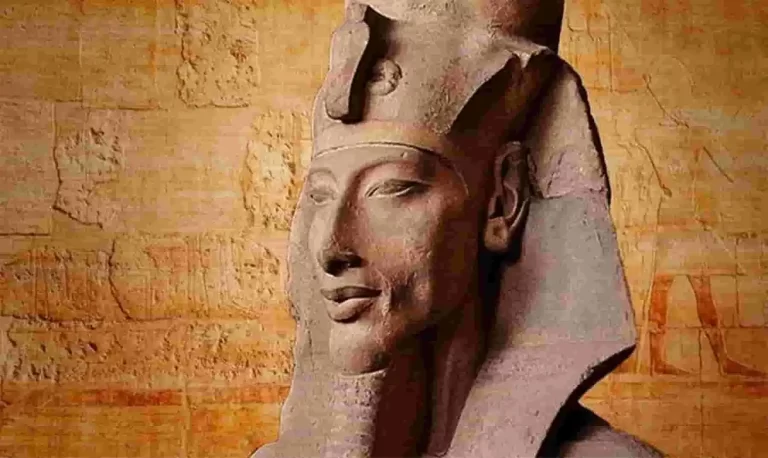
The white crown stood for Upper Egypt, the red crown for Lower Egypt and the double crown for both. The blue khepresh was a war crown, and the striped nemes headcloth is the one you see on the Sphinx and Tutankhamun’s mask.
7. Men and Women Wore Makeup
Pharaohs and their subjects lined their eyes with kohl, which protected against sun glare and infection, and was linked with the Eye of Horus.
8. False Beards Were Royal Symbols
Kings wore an artificial braided beard tied to the chin as a sign of divine kingship. Even Hatshepsut is shown with one.
9. Their Tombs Moved from Pyramids to Hidden Valleys
Old Kingdom kings built pyramids; New Kingdom kings dug hidden tombs in the Valley of the Kings to escape robbers, though almost all were robbed in antiquity.
10. You Can Still See Their Faces
Many royal mummies survive. Ramses II, Seti I, Hatshepsut and others are displayed at the National Museum of Egyptian Civilization in Cairo, and Tutankhamun still lies in his tomb in Luxor.
Follow Their Footsteps
- 4-day Nile cruise Aswan to Luxor – from $399
- Day trip to Abu Simbel – from $45
- Luxor East and West Bank full day – from $39
- 8 nights / 9 days Egypt tour – from $899
- All Egypt Nile cruises
Frequently Asked Questions about the Pharaohs
Who was the most famous pharaoh?
Tutankhamun is the most famous today because of his treasure, while Ramses II is usually considered the greatest.
How many pharaohs were there?
About 170 known rulers across roughly 30 dynasties.
Who was the last pharaoh of Egypt?
Cleopatra VII, who died in 30 BC, is usually considered the last active pharaoh.