Tour overview
The best sites in Cairo, Alexandria, Luxor, Dendera, Abydos, Edfu, Kom Ombo, Aswan, Abu Simbel, and ultimately a return to Cairo are all included in this 13-day itinerary of Egypt.
Tour Itinerary
Day 01: Cairo Int. Airport – Cairo On
When you arrive at Cairo International Airport, a person who speaks English will welcome you and assist you with any paperwork before driving you to your hotel for the night.
Meals Included
No Meals
Day 02: Pyramids – Memphis & Sakkara
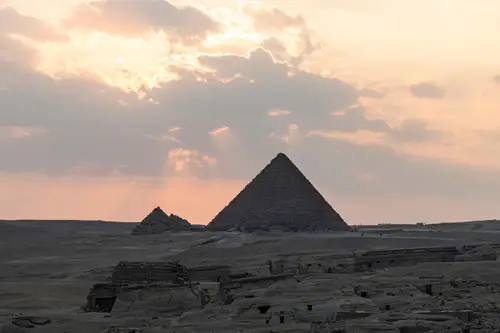
Hotel breakfast is available. Your English-speaking Egyptologist tour guide will next greet you and take you to the Pyramids of Giza, also known as “Khufu, Khafre, and Menkaure,” where three pyramids representing the greatness of Egypt stand guard over the entire area. then make your way to a nearby eatery for lunch.
Following that, you will travel to Sakkara, where you will be thrilled to explore King Djoser’s Step Pyramid. King Djoser requested that his chief architect Imhotep design something unique so that the king may be buried, and that is how this pyramid got its start. As a result, the renowned architect constructs the Step pyramid, surprising the king because it was seen to be a new accomplishment at the time.
Finally, we will travel to Memphis, where you may explore The Open Air Museum and its magnificent Ramses II structures. You will return to your Cairo hotel for the night when your day tour is over.
Meals Included
Breakfast
Lunch
Day 03: Egyptian Museum – Citadel & Khan El Khalili
Hotel breakfast is available. Your English-speaking tour guide will be waiting for you at the hotel to start your second day of sightseeing in Cairo with you. The best of our monuments are waiting for you, making your visit completely different and more enjoyable today. Start your journey to the Egyptian Museum, one of Egypt’s most significant museums and home to many famous king Tutankhamun monuments as well as other Pharaonic artifacts. After that, you will eat lunch at a nearby restaurant.
After lunch, you will be taken to Old Cairo, where you may visit the Citadel of Salah El-Din, which was crucial in defending Egypt for more than 700 years as it served as the center of power.
Then head to Khan El-Khalili, considered to be one of the Middle East’s most magnificent bazaars and one of Egypt’s oldest and most intriguing markets.
You will be transferred back to your hotel in Cairo for the night when your day tour is done.
Meals Included
Breakfast
Lunch
Day 04: Flight to Luxor – Full Day West & East Bank of Luxor
Breakfast followed by hotel check-out. Once at the hotel, our representative will pick you up and drive you to Cairo airport for your journey to Luxor.
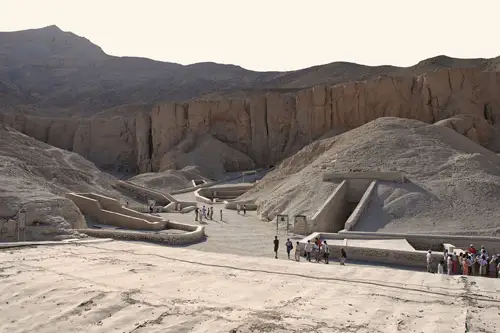
Transfer to the West Bank of Luxor after landing at Luxor. Enter the tomb of King Tut Ankh Amun to begin your enchanted tour of Thebes, the sacred land, by discovering the wet bank of Luxor and the Valley of the Monarchs, which is thought to be the royal cemetery of the Theban kings and rulers of ancient Egypt.
next travel to Deir El Bahari to see Queen Hatshepsut Temple. Because it was entirely carved into the mountain, this temple is regarded as one of the most beautiful specimens of ancient Egyptian architecture.
You will see the Colossi of Memnon, which belonged to king Amenhotep III, at the conclusion of the journey. Lunch at a neighborhood eatery.
Next, you’ll find the East Bank of Luxor, which includes the Karnak Temple Complex, the biggest building ever constructed in human history. The main structure is that of the god Amun Ra since it was regarded as the house of the god on earth. The earlier construction dates back to the middle kingdom, but there are other records that mention the previous structures as being as old as the third dynasty.
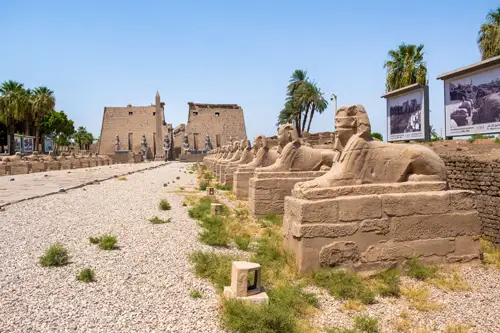
The Temple of Luxor, which was started by one of the 12th dynasty monarchs and finished by the famous pharaoh Ramses II, will be the next place you go. Similar to Karnak, this temple was situated in the center of ancient Thebes and was devoted to the chief/principal god Amun Re. You will be taken to your hotel in Luxor for check-in and overnight when your day trip is over.
Meals Included
Breakfast
Lunch
Day 05: Day Tour to Dendera and Abydos Temples
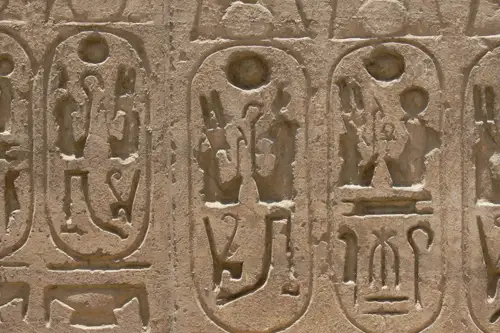
After breakfast at your accommodation, your knowledgeable tour guide will take you up and drive you to the memorial temple of king Seti I in Abydos, which was constructed for the god Osiris of the afterlife and resurrection by Seti I and his son Ramses II. One of Egypt’s most magnificent religious buildings is the Abydos Temple. There are seven chapels dedicated to Horus, Isis, Osiris, Amon Re, Ptah, Seti I, and Re-Horakhty among the fine art reliefs that incorporate the Abydos Kings list (showing the cartouche containing the names of the pharaohs of Egypt from the first to the 19th dynasty). Find the mysterious Osireion, which is considered to be Osiris’s tomb, towards the back of the temple. After finishing, take advantage of your free time to leisurely explore the shrine.
Continue to visit Dendera temple (Located 99km to the South of Abydos), It is one of the best-preserved temple complexes in Egypt. The temple was founded by pharaoh Pepi I (2250 BC) and continued during the New kingdom (1550-1080 BC). What was left dates back to the Greco-Roman time in Egypt The ceiling of the Dendera Temple has recently been cleaned, in a careful way that removed hundreds of years of black soot, without harming the ancient paint underneath. As a result, the spectacular ceiling painting has been exposed in the main hall of Hathor temple, and some of the most vibrant and colorful paintings dating from antiquity are now visible. Discover the widely known Dendera zodiac relief found during the Greco-Roman time in Egypt, the crypts were for keeping cult equipment, archives, and magical emblems for the temple’s protection, though the most important object kept in the crypts was a statue of the BA of Hathor, the Isis Birth House (Mammisi) raised by Nectanebo II and the temple sacred lake. On the rear outside wall of the temple, the scenes show the massive figure of Cleopatra VII and her son Julius Caesar, Caesarion. Then enjoy free time to discover the temple at leisure.
You will be driven back to your hotel to spend the night in Luxor after finishing.
Meals Included
Breakfast
Lunch
Day 06: Day Tour to Luxor West Bank ll (Habu Temple and the valley of Queens and Workers)
Early in the morning, a Luxor and Aswan Travel licensed tour guide will pick you up from your hotel and drive you by private air-conditioned vehicle to the West Bank of the Nile, where you will visit Medinat Habu, an archaeological site that is located opposite the modern city of Luxor, Egypt, on the West Bank of the River Nile close to the foot of the Theban Hills. Although there are other buildings in the vicinity, the Mortuary Temple of Ramesses III is the location’s most well-known landmark today. The 150-meter-long temple is of orthodox design and closely resembles Ramesses II’s funerary temple (the Ramesseum). It is enclosed by a substantial mud-brick enclosure that may have served as a fortification and is quite well maintained. The primary entry is through a center, a fortified gatehouse (resembling an Asiatic fortress). Jean-François Champollion, who examined the site’s ruins in 1829 and first recognized the hieroglyphs forming Ramesses’ names and titles on the walls, came up with the name, at least in its French form, Rhamesséion. Its original name was Thebes-the-city which joins with the House of millions of years of Usermaatra-steepen. You will also be able to tour various other temples within the Habu Temple, including the 18th-dynasty Temple of Amun which was constructed by Queen Hatshepsut and Thutmose III. Over the years, it has experienced numerous changes and improvements, some of which occurred during the 20th, 25th, 26th, 29th, and 30th Dynasties and the Greco-Roman era. Then
Continue your day tour to Deir el-Medina, also known as The Valley of the Worker, which is an ancient Egyptian settlement where the craftspeople who built the tombs in the Valley of the Kings during the 18th and 20th dynasties of the New Kingdom era lived (ca. 1550–1080 BC) The paintings seem to be so new.
Visit Valley of the Queens to cap off your day of sightseeing. it is a location where the women of Pharaohs were interred in antiquity. Because many princes and princesses were interred there with various nobility members, it was referred to in antiquity as Ta-Set-Neferu, or “the site of the Children of the Pharaoh,” along with the queens of the 18th, 19th, and 20th dynasties (1550-1070 BCE). Mortuary priests looked after the tombs of these people, performing daily rituals and offering prayers and offerings to the dead nobility. The valley is situated on the west bank of the Nile, across from Thebes, and is close to the more well-known Valley of the Kings (modern Luxor). Due to its relative remoteness and closeness to the capital, this desolate region in the western highlands was chosen. The kings of the 18th dynasty decided to be buried in rock-cut tombs to protect themselves from tomb robbers as much as possible rather than construct pyramids as conventional burial chambers (perhaps due to their vulnerability to tomb thieves).
Lunch at a nearby restaurant followed by a transfer back to your accommodation
Afternoon excursion to the Mummification Museum and the Luxor Museum
The Luxor Museum, which is situated in a very lovely location on the east bank of the Nile between Luxor Temple and Karnak Temple, will be the first museum you visit. Our tour guide will pick you up in an air-conditioned car to visit the other two wonderful museums in Luxor. The Museum exhibits diverse collections of artifacts from the Theban Temples and necropolis, particularly from the New Kingdom, including “Jewelry, Furniture, Statues, Stelae, Pottery.”
The Mummification Museum, which was established in 1997 and is situated on the east bank, will allow us to continue our exploration of ancient Egyptian history. It provides an explanation of the mummification process and the methods that were employed for both humans and animals, as well as displays of human and animal mummies and the tools that were employed, as well as examples of the kinds of objects that were traditionally preserved.
You will return to your hotel and spend the night in Luxor after your trip is done.
Meals Included
Breakfast
Lunch
Day 07: Day trip to Edfu and Kom Ombo
After breakfast, check out of your hotel. Our tour guide will pick you up and take you on a full-day excursion to the Temple of Edfu, where you will see the magnificent temple devoted to Horus, which is often regarded as the best-preserved cult temple in Egypt. It was there, according to Egyptian mythology, that the falcon-headed god Horus killed Seth in retaliation for the death of his father Osiris.
Travel to Koum Oumbo City to see the Temple of Koum Oumbo, which is perched high above the Nile. Due to its dual entrances, which each honor a different deity—”Haroeris” with his falcon head and “Sobek” with his crocodile head—it stands apart from other temples. The crocodile-headed fertility god Sobek and the falcon-headed Horus of ancient Egypt were the two gods in whose honor the Temple of Kom Ombo was constructed. Additionally, Kom Ombo is significant for its enormous sugar cane.
Arrive in Aswan, eat lunch there, check into your hotel, and spend the night there.
Meals Included
Breakfast
Lunch
Day 08: Day Trip to Philae Temple, High Dam & Unfinished Obelisk
After breakfast at your hotel, our tour guide will pick you up to begin your tour to the High Dam of Aswan, which was erected in the 1960s and was considered an engineering marvel at the time. The Dam, which is carved into the existing granite and provides irrigation and electricity for the entirety of Egypt, is 11,811 feet long, 3215 feet thick at the base, and 364 feet tall. It contains more material than was used to build the Great Pyramid of Cheops.
Continue on to the Unfinished Obelisk at the Aswan granite quarries, where most of the red granite used for historic temples and colossal structures originated. A crack was found while the Unfinished Obelisk was being hewn from the rock, and it is still there today.
Continue your journey to see the magnificent Philae Temple, which was painstakingly moved to its current location (about 500 meters from the original site) when the High Dam’s construction caused the surrounding Nile waters to rise. The Philae Temple was built in honor of the goddess Isis, the island’s principal deity. You will be driven back to your hotel at the conclusion of your tour.
Meals Included
Breakfast
Lunch
Day 09: Day Tour Abu Simbel Fly Back to Cairo
Check out and receive a breakfast box from your accommodation. Later, a private air-conditioned van will transport you to Abu Simbel. When Ay and Horemheb had rock-cut chapels hewn in the hills to the south, they first became aware of the original site, which was known as Meha in antiquity. This was during the 18th Dynasty.
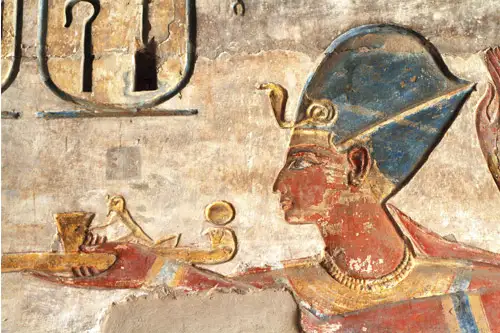
When you get there, you’ll head over to the Ramses II-built Abu Simbel Temples. Ramesses II erected the first and largest temple, which was devoted to the revered deity Rahorakhty. The second, smaller temple was devoted to the monarch and his beautiful bride, Queen Nefertari.
You will drive to the Aswan airport to catch your flight back to Cairo when your day tour is over. You’ll be met by one of our representatives when you land in Cairo, who will take you to your hotel where you can spend the night.
Meals Included
Breakfast
Lunch
Day 10: Alexandria City Tour
Breakfast at your Cairo hotel. After that, our Egyptologist tour guide will meet you and take you on a lovely tour of Alexandria.
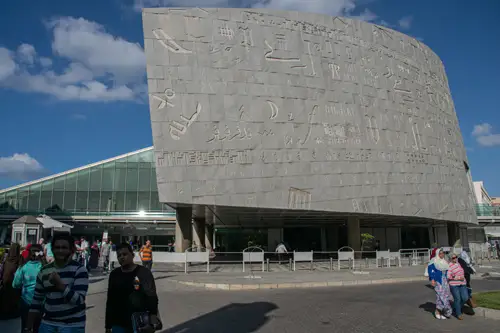
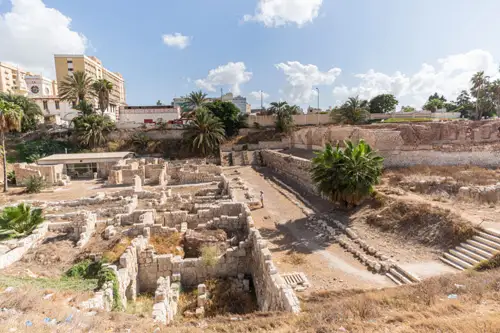
You will begin your tour of Alexandria by going into “The Alexandria Library,” one of the most important libraries in antiquity. It is the original location of the previous Pharaoh. After that, you’ll be taken to a nearby restaurant for lunch.
You will continue after lunch to see The Roman Amphitheatre, which is one of the most well-known structures from the Greco-Roman era.
Pompey’s Pillar, built in 292 AD, is the next stop on your tour of Alexandria. The Sultan Qaitbay Citadel, one of Alexandria’s most well-known tourist attractions, will be your final stop before being moved.
When your day excursion is complete, we’ll take the drive back to Cairo. After arriving in Cairo, go to your hotel to spend the night.
Meals Included
Breakfast
Lunch
Day 11: Day Tour to Dahshour and Meidum
Hotel breakfast is available. As you explore Dahshour’s two magnificent pyramids—the Red Pyramid and the Bent pyramid—built during the rule of King Sneferu (2613-2589 BC), you will be accompanied by your knowledgeable Egyptology guide. The White Pyramid of Amenemhet II, the Black pyramid of Amenemhet III, and the pyramid of Senusret III are among the other monuments at Dahshur that date to the 12th and 13th dynasties. There are also numerous tombs of nobles and officials from various eras. Following the site visit, a delicious authentic local lunch will be served in a stunning outdoor restaurant surrounded by palm trees.
Next, proceed to Meidum. This pyramid, which lies 65 kilometers south of Saqqara, has a peculiar charm and is one of those places that once held and still holds many secrets. After the site excursion, guests are taken back to the hotel in a vehicle that once belonged to Sneferu (the first king of the 4th dynasty), whose name is mentioned in graffiti from the New Kingdom.
Meals Included
Breakfast
Lunch
Day 12: Islamic & Coptic Cairo Tour
Hotel breakfast is available. You will then begin your tour of Cairo’s Islamic and Coptic neighborhoods. You will learn about the importance of Egypt’s rich history on this tour, which is incredibly significant. You’ll learn about Coptic history as well as Islamic history.
You will go to the Ahmed Ibn Tulun Mosque, which is Cairo’s oldest still-standing and operational Islamic structure. Due to its prominence in the Islamic world, it also exists as a unique example of the time and architecture of the classical phase of Islam, or the ninth and tenth centuries.
Next, head to the Sultan Hassan Mosque, which is regarded as Cairo’s most aesthetically cohesive and compact structure. The structure was built in 1256 AD as a mosque and theological school for all sects for Sultan Hassan bin Mohammad bin Qala’oun. After that, you’ll go to El Refa’i Mosque, which is situated across a pedestrian street from Sultan Hassan Mosque. Have lunch at one of the eateries around here.
After that, your Coptic Tour will start with the Hanging Church (also known as the Church of the Virgin Mary), which was incorporated within the Roman fortress’s Water Gate walls. Given that it was built somewhere in the fourth century, it may be the oldest Christian church in Egypt.
Then you’ll go to the Church of St. Sergius (Abu Serga), which, according to history, is situated atop one of the locations where the Holy Family reportedly rested while fleeing from Herod. Following this walk leads to Egypt’s oldest synagogue, the Ben Ezra Synagogue, which was built in the ninth century. You’ll return to your accommodation once this great and unforgettable tour is over. Cairo overnight stay.
Meals Included
Breakfast
Lunch
Day 13: Cairo Int. Airport – Final Departure
After breakfast, check out. We’ll send a person to pick you up. Transfer to the international airport in Cairo for your last flight.
Meals Included
Breakfast
Included
- 5* hotel in Cairo for 7 nights
- 5* hotel in Luxor for 3 nights
- 5* hotel in Aswan for 2 nights
- Plane
- Private Air-Conditioned Vehicle
- Horse carriage at Edfu
- Taftaf at Valley of the Kings
- Motor Boat to Philae Island
- 12 breakfasts, 11 lunches
- Meet and assist English-speaking representatives.
- Entrance fees to the above-mentioned archaeological sightseeing.
- Private Egyptologist English-speaking tour guide (s).
- Domestic Flight Tickets
- Complementary 01 bottles of water per day per person in Cairo.
- All transfers by A-C vehicles with qualified driver (s).
- Portage when needed
- All taxes & service charges
Excluded
- International Airfare
- Entry Visa to Egypt
- Insurance
- Laundry service
- Any other service or tour not mentioned in the itinerary
Tour pricing
Tour Gallery