Abydos was the holiest city of ancient Egypt, believed to be the burial place of the god Osiris. Its Temple of Seti I, about 170 km north of Luxor, has some of the finest carved reliefs ever made in Egypt, the famous Abydos King List, and the mysterious Osireion behind it.
- Location: near El Balyana, Sohag, about 2.5–3 hours’ drive north of Luxor
- Main temple: Temple of Seti I, c. 1290 BC, finished by Ramses II
- Dedicated to: seven gods, including Osiris, Isis, Horus, Amun-Re and Ptah
- Must-see: King List, seven chapels, Osireion, “helicopter” hieroglyphs
- Time needed: 1.5–2 hours
Why Abydos Was Sacred
In myth, Seth killed Osiris and scattered his body, and Abydos was said to keep his head. Every Egyptian hoped to make a pilgrimage here, in life or after death, and many set up memorial stones so they could share in the yearly Osiris festival. The kings of Egypt’s first dynasties, around 3000 BC, were buried at Umm el-Qa’ab in the desert behind the town. Read the full story in the myth of Osiris.
The Temple of Seti I
Seti I, father of Ramses II, built a temple unlike any other: instead of one sanctuary it has seven side-by-side chapels for seven gods, including Seti himself as a god. The raised reliefs inside, of fine white limestone with much original paint, are considered among the most beautiful in Egypt. Read more about the king in our guide to King Seti I.
The Abydos King List
In a corridor called the Gallery of the Kings, Seti and the young Ramses offer to 76 earlier pharaohs, listed by name from Menes onwards. It is one of the most important sources for the order of Egypt’s kings. Some rulers are left out on purpose, including Hatshepsut, Akhenaten and Tutankhamun.
The “Helicopter” Hieroglyphs
On one ceiling beam, carvings appear to show a helicopter and other machines. They are in fact the result of re-carving: Seti’s titles were filled with plaster and re-cut with Ramses II’s titles, and when the plaster fell out the two texts overlapped.
The Osireion
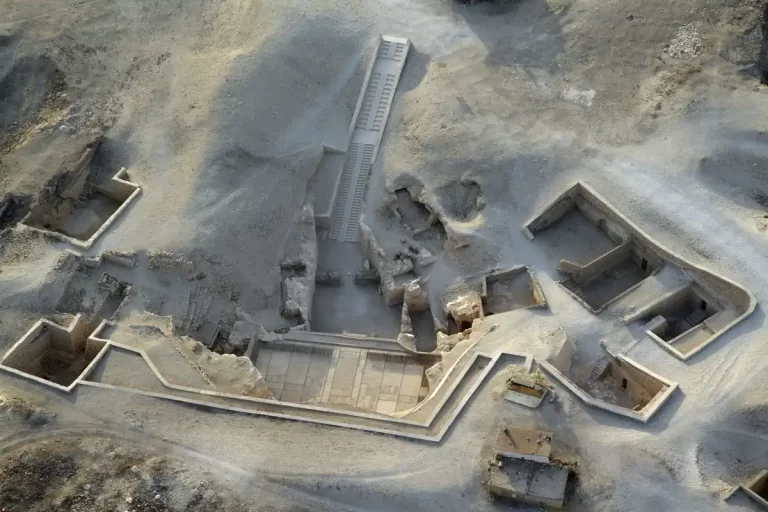
Behind the temple lies the Osireion, a sunken structure of massive granite pillars, often flooded with groundwater. It was built as a symbolic tomb of Osiris and is one of the most atmospheric places in Egypt.
Visiting Abydos
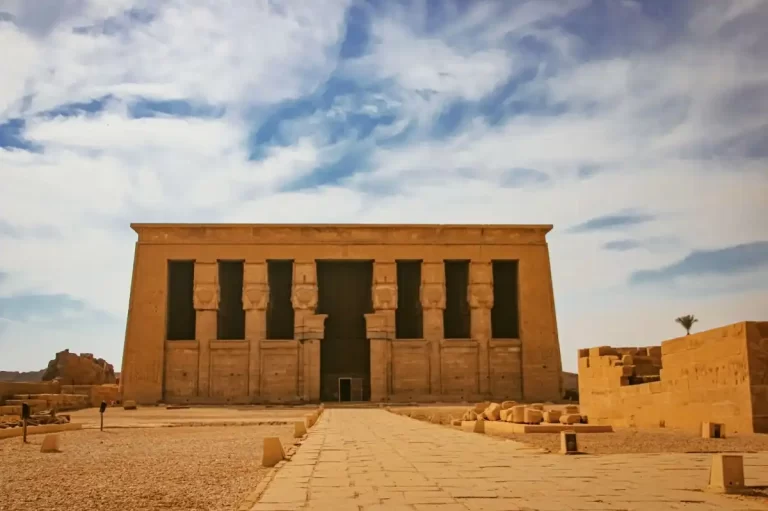
- Abydos is usually combined with Dendera Temple on a full-day trip from Luxor.
- It sees few visitors, so it feels peaceful and personal.
- Start early because the drive is long.
Tours to Dendera and Abydos
- Day tour from Luxor: Dendera and Abydos temples – from $69
- Half day tour from Luxor: Dendera Temple – from $49
- 2-day Luxor, Dendera and Abydos – from $339
- 3-day Luxor, Dendera and Abydos – from $439
- Dendera and Abydos from Safaga port – from $199
Frequently Asked Questions about Abydos Temple
What is the Abydos King List?
It is a carved list of 76 pharaohs in the Temple of Seti I, showing Seti and his son Ramses II honouring the kings who ruled before them. It is a key source for Egyptian chronology.
Are there really helicopters carved at Abydos?
No. The shapes come from two sets of hieroglyphs overlapping after Ramses II re-carved his father’s titles and the plaster filling fell away.
How far is Abydos from Luxor?
About 170 km, roughly 2.5 to 3 hours by road.
Why is Abydos important?
Abydos was the cult centre of Osiris and the burial place of Egypt’s first kings, making it one of the most sacred sites in ancient Egypt.