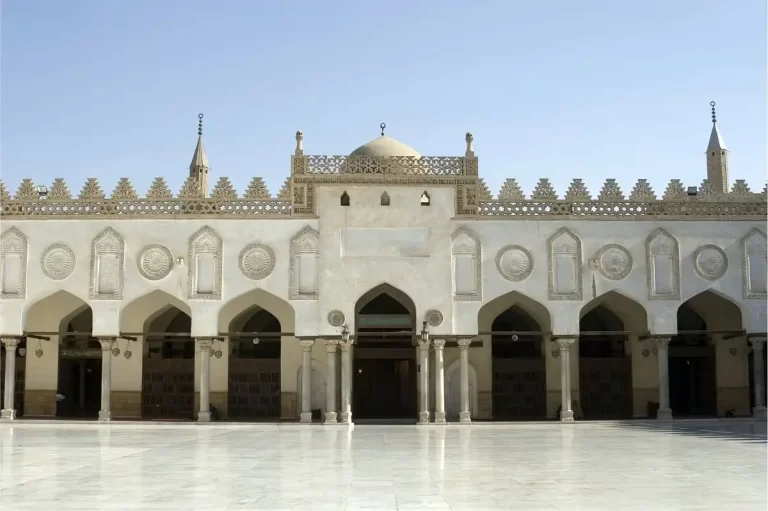
The Mosque of Amr ibn al-As is the first mosque built in Egypt and in Africa. Founded in 641–642 AD by the Arab general Amr ibn al-As, at the centre of his new capital Fustat, it stands today on the edge of Coptic Cairo. Rebuilt and enlarged many times, it remains an active and much-loved mosque, especially during Ramadan.
- Location: Fustat, Old Cairo, a short walk from Coptic Cairo
- Founded: 641–642 AD
- Founder: Amr ibn al-As, who brought Islam to Egypt
- Today: large hall of reused marble columns, open courtyard
- Time needed: 20–30 minutes
History
In 640 Amr ibn al-As led Arab armies into Egypt and took the Roman fortress of Babylon (today’s Coptic Cairo). He founded the garrison city of Fustat beside it and built a simple mosque of mud brick and palm trunks. Over the centuries it was enlarged by governors and rulers; in 827 it was greatly expanded and became one of the largest mosques of its time. After Fustat was burned in 1168 to stop the Crusaders, the mosque was rebuilt, and much of what you see today dates from later restorations.
What to See
- A prayer hall with over 150 marble columns, many taken from Roman and Byzantine buildings.
- A wide courtyard with a domed fountain.
- A corner shrine said to mark the place of Amr’s son.
Visiting Tips
- Combine with the Hanging Church, Abu Serga and Ben Ezra Synagogue in Old Cairo.
- The National Museum of Egyptian Civilization (NMEC), home of the royal mummies, is nearby.
- Dress modestly and avoid prayer times.
Ramadan at the Mosque of Amr
The Mosque of Amr is one of the most popular places in Cairo for Ramadan night prayers. On the 27th night, believed to be close to the Night of Power, tens of thousands of worshippers fill the courtyard and surrounding streets. Visitors are welcome at other times but should avoid prayer hours.
Fustat: Egypt’s First Islamic Capital
Fustat grew around the mosque into a wealthy city of merchants and craftsmen, famous for its glass, ceramics and textiles. It was largely destroyed in 1168. Archaeologists have uncovered its streets and houses, and the area today hosts pottery workshops and the National Museum of Egyptian Civilization, home of the royal mummies.
Architecture Through the Ages
The mosque has been rebuilt so many times that it is a mix of periods: early Islamic layout, Abbasid enlargements, Mamluk minarets and later restorations. The forest of reused Roman and Byzantine columns gives the prayer hall its distinctive look.
Getting There
The mosque is a short walk from Coptic Cairo and the Mar Girgis metro station, so it fits easily into an Old Cairo tour with Abu Serga and the Hanging Church.
Islamic and Old Cairo Tours
- Islamic and Christian Cairo day tour – from $49
- Egyptian Museum, Citadel and Khan el-Khalili – from $49
- Egyptian Museum, Citadel and Old Cairo – from $49
- 2-day Cairo tour – from $277
- All Cairo day tours
Frequently Asked Questions about the Mosque of Amr ibn al-As
What is the first mosque in Africa?
The Mosque of Amr ibn al-As in Fustat, Cairo, founded in 641–642 AD, is considered the first mosque built in Egypt and in Africa.
Is the Mosque of Amr ibn al-As original?
No. It has been rebuilt and enlarged many times, so little of the original 7th-century structure survives.
Can tourists visit the Mosque of Amr ibn al-As?
Yes, outside prayer times, with modest clothing and shoes removed. Women should cover their hair.