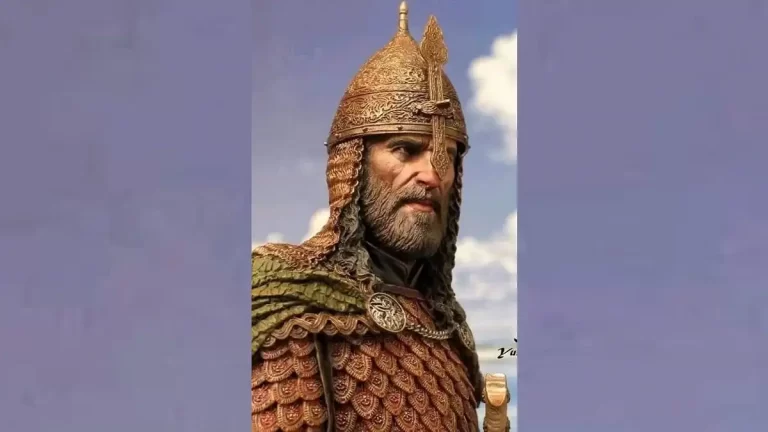
Ramses II, called Ramses the Great, was the most powerful and celebrated pharaoh of the New Kingdom. He ruled Egypt for 66 years (c. 1279–1213 BC), fought the Hittites at Kadesh, signed the first known peace treaty in history and built more monuments than any other king, including Abu Simbel. Later Egyptians called him “the Great Ancestor”.
Early Life and Rise to Power
Ramses was the grandson of Ramses I, a military officer who became king. His father Seti I made him co-regent as a young man and took him on campaigns. He became sole king at around 25 and ruled until his death at about 90, outliving many of his children.
The Battle of Kadesh
In 1274 BC Ramses led an army into Syria against the Hittite king Muwatalli II. Tricked by false spies, his army was ambushed near Kadesh, but he rallied his troops and fought his way out. The result was really a draw, yet Ramses presented it as a great personal victory and carved it on the walls of Abu Simbel, Luxor Temple, Karnak and the Ramesseum. Read more about the Battle of Kadesh.
The First Peace Treaty
Around 1259 BC Ramses and the Hittite king Hattusili III signed a peace treaty, the earliest surviving one in the world. Copies were found in Egyptian hieroglyphs at Karnak and in Akkadian on clay tablets at Hattusa in Turkey. A replica hangs at the United Nations in New York. Ramses later married a Hittite princess to seal the peace.
The Great Builder
- Abu Simbel: two temples cut into the mountain, for himself and Nefertari.
- The Ramesseum: his mortuary temple on Luxor’s West Bank, with a fallen colossus that inspired Shelley’s poem “Ozymandias”.
- Karnak: he completed the decoration of the Great Hypostyle Hall.
- Luxor Temple: the first pylon, the courtyard, colossi and the obelisk.
- Pi-Ramesses: a new capital in the eastern Delta.
- Colossal statues, such as the one in the Grand Egyptian Museum and at Memphis.
Family
Nefertari was his favourite wife, honoured with a temple at Abu Simbel and the most beautiful tomb in the Valley of the Queens. He had several other great wives, including Isetnofret, mother of his successor Merenptah. His son Khaemwaset is sometimes called the first Egyptologist because he restored older monuments.
Death and Mummy
Ramses was buried in tomb KV7 in the Valley of the Kings. Priests later moved his mummy to a hidden cache at Deir el-Bahari to protect it from robbers, where it was found in 1881. In 1976 the mummy was flown to Paris for conservation and was famously issued an Egyptian passport. In 2021 it moved to the NMEC in the Pharaohs’ Golden Parade.
Follow Their Footsteps
- 4-day Nile cruise Aswan to Luxor – from $399
- Day trip to Abu Simbel – from $45
- Luxor East and West Bank full day – from $39
- 8 nights / 9 days Egypt tour – from $899
- All Egypt Nile cruises
Frequently Asked Questions about Ramses II
How long did Ramses II rule?
About 66 years, from around 1279 to 1213 BC, one of the longest reigns in Egyptian history.
Where is the mummy of Ramses II?
In the Royal Mummies Hall of the National Museum of Egyptian Civilization (NMEC) in Cairo.
Was Ramses II the pharaoh of the Exodus?
He is often linked with the Exodus story in popular culture, but there is no historical or archaeological evidence that identifies him with it.
Where can I see monuments of Ramses II?
Abu Simbel, Luxor Temple, Karnak, the Ramesseum and Abydos are the most impressive, plus his colossus at the Grand Egyptian Museum.