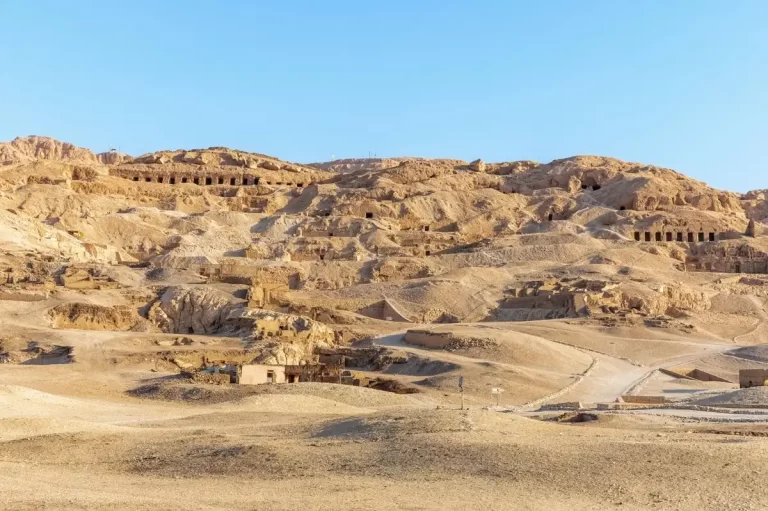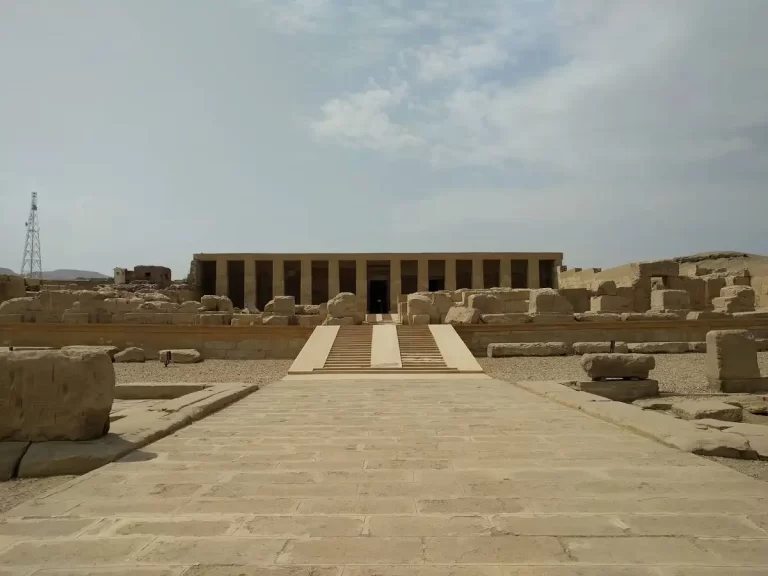
The Temple of Hatshepsut rises in three terraces against the cliffs of Deir el-Bahari on Luxor’s West Bank. Built around 1470 BC for Queen Hatshepsut, one of the few women to rule Egypt as pharaoh, it was called Djeser-Djeseru, “Holy of Holies”. Its clean lines look almost modern, and it is one of the most photographed monuments in Egypt.
- Location: Deir el-Bahari, West Bank of Luxor
- Built: c. 1479–1458 BC, 18th Dynasty
- Architect: Senenmut, the queen’s chief official
- Dedicated to: Amun-Re, with chapels for Hathor and Anubis
- Time needed: about 1 hour
- Best time: morning, when the sun lights the facade
Who Was Queen Hatshepsut?
Hatshepsut was the daughter of Thutmose I and wife of Thutmose II. When her husband died, she ruled first as regent for the young Thutmose III and then crowned herself king, ruling for about 20 years. Her reign was peaceful and prosperous, known for trade and building rather than war. After her death, many of her images were erased, probably to secure Thutmose III’s line, which is why some statues at the temple were found smashed.
Architecture of the Mortuary Temple
The temple was a mortuary temple: a place where the queen would be worshipped after death, while her body lay in the Valley of the Kings on the other side of the mountain. Senenmut designed three rising terraces linked by long ramps, with colonnades cut into the cliff behind. A causeway once ran from the valley temple near the Nile to the entrance, lined with sphinxes.
What to See at Hatshepsut Temple
The Punt Colonnade
On the middle terrace, reliefs record the queen’s trade expedition to the Land of Punt (probably on the Horn of Africa). You can see ships, incense trees, giraffes and the famous figure of the Queen of Punt.
The Birth Colonnade
These reliefs tell the story of Hatshepsut’s divine birth as the daughter of the god Amun, a powerful way to justify a woman’s rule.
The Chapel of Hathor
The south side holds a chapel to Hathor, with columns topped by the goddess’s cow-eared face. Some original colour survives.
The Chapel of Anubis
On the north side, the chapel of Anubis has some of the brightest painted reliefs in the temple.
The Upper Terrace and Osiride Statues
The top terrace is fronted by statues of Hatshepsut in the form of Osiris. Behind them lie the sanctuary cut into the rock and a sun court for Re-Horakhty.
Restoration of the Temple
When excavated in the 19th century, the temple was largely in ruins. A Polish-Egyptian mission has been rebuilding it since the 1960s, putting thousands of original blocks back in place. Much of what you see today is carefully reassembled ancient stone.
Tips for Visiting
- The temple faces east, so morning light is best for photos.
- A small electric car takes you from the ticket office to the first ramp.
- There is little shade on the terraces; bring a hat and water.
- For the best view of the whole site, see it from above on a Luxor hot air balloon ride.
Tours That Visit Hatshepsut Temple
Frequently Asked Questions about Hatshepsut Temple
Why is Hatshepsut Temple famous?
It is the mortuary temple of Hatshepsut, one of Egypt’s few female pharaohs, and its terraced design set into the cliffs of Deir el-Bahari is unique in ancient Egyptian architecture.
Was Hatshepsut buried in her temple?
No. The temple was for her worship after death. She was buried in the Valley of the Kings (tomb KV20), on the other side of the mountain.
How long does it take to visit Hatshepsut Temple?
About one hour is enough to climb the terraces and see the Punt, Hathor and Anubis reliefs.
What does Djeser-Djeseru mean?
Djeser-Djeseru means “Holy of Holies” or “Sublime of Sublimes”, the ancient name of the temple.