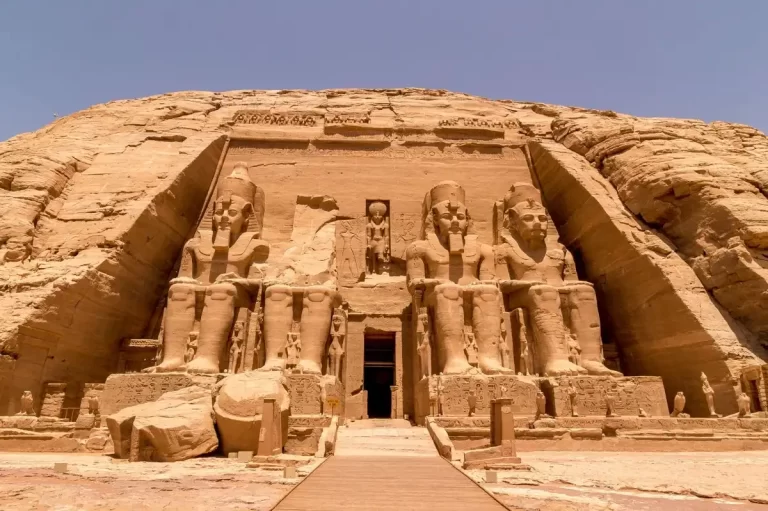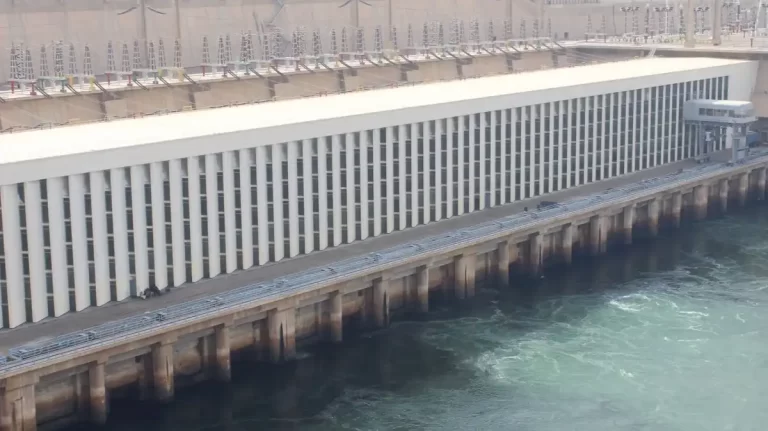
Kalabsha Temple is the largest free-standing temple of Egyptian Nubia, now standing on an island beside the Aswan High Dam. Dedicated to Mandulis, a Nubian sun god, it was built under the Roman emperor Augustus and was moved block by block in the 1960s to escape the waters of Lake Nasser.
- Location: New Kalabsha, on Lake Nasser just south of the High Dam
- Built: c. 30 BC – 14 AD, reign of Augustus, on an earlier site
- Dedicated to: Mandulis, with Isis and Osiris
- Also on site: Beit el-Wali, Kiosk of Qertassi
- Access: short boat ride; quiet and rarely crowded
History of Kalabsha
The temple originally stood at Talmis, about 50 km south of Aswan. Its builders followed the classic Egyptian plan: a pylon, a courtyard, a hypostyle hall and a sanctuary, though some decoration was never finished. In Christian times it became a church. When Lake Nasser began to rise, West Germany funded its move in 1961–1963, cutting it into some 13,000 blocks. In return Egypt gave Germany the Kalabsha Gate, now in Berlin.
What to See
- The temple of Mandulis: a fine pylon and hall, with a staircase to the roof and views of the lake.
- Beit el-Wali: a small rock-cut temple of Ramses II, with lively scenes of his Nubian and Syrian wars.
- Kiosk of Qertassi: a small Roman kiosk with Hathor-headed columns.
- Rock art and inscriptions moved from other flooded Nubian sites.
Visiting Kalabsha
Kalabsha is reached by boat from the west side of the High Dam. It pairs well with the Nubian Museum, which explains the rescue of Nubia’s monuments.
Beit el-Wali in Detail
Beit el-Wali, “House of the Holy Man”, is a small rock-cut temple built by Ramses II early in his reign. Its entrance hall has vivid painted reliefs of the young king fighting Nubians and Syrians, with scenes of tribute: giraffes, monkeys, leopard skins, ivory and gold. It was moved to New Kalabsha with the main temple.
The Kalabsha Gate in Berlin
As a thank-you for Germany’s help in moving Kalabsha, Egypt gave a Ptolemaic gateway from the temple to Berlin, where it is displayed at the Egyptian Museum. Several other countries received temples from the Nubian rescue campaign, including Dendur (New York), Debod (Madrid), Taffeh (Leiden) and Ellesyia (Turin).
Best Time to Visit
Mornings are best, before the heat on the open island. The site is rarely crowded, so you can explore the pylon, hall and roof in peace. Boats leave from the harbour near the west end of the High Dam; your guide or driver can arrange the crossing.
Combine with
Kalabsha pairs well with the Aswan High Dam, the Nubian Museum and Philae Temple.
Aswan Tours
- Aswan sightseeing tour – from $49
- Nubian village day tour – from $59
- Felucca ride and Botanical Garden – from $29
- Kalabsha Temple and Nubian Museum – from $59
- Day trip to Abu Simbel – from $45
- All Aswan day tours
Frequently Asked Questions about Kalabsha Temple
Who was Mandulis?
Mandulis was a Nubian sun god, often linked with Horus and Isis, worshipped in Lower Nubia in Greco-Roman times.
Why was Kalabsha Temple moved?
It would have been flooded by Lake Nasser after the Aswan High Dam was built, so it was moved to New Kalabsha in 1961–1963.
How do you get to Kalabsha Temple?
By a short motorboat ride from the harbour on the west side of the Aswan High Dam.
Is Kalabsha Temple worth visiting?
Yes, for its quiet setting on Lake Nasser, the large temple of Mandulis and the colourful reliefs of Beit el-Wali.