Akhenaten was the pharaoh who tried to change Egypt’s religion. Ruling around 1353–1336 BC, he abandoned the traditional gods for the worship of one god, the Aten, the disc of the sun, built a new capital at Amarna and created a revolutionary art style. After his death, his successors erased his name from history.
- Reign: c. 1353–1336 BC, 18th Dynasty
- Birth name: Amenhotep IV
- Wife: Nefertiti
- Capital: Akhetaten (Tell el-Amarna)
- Son: probably Tutankhamun
From Amenhotep IV to Akhenaten
He came to the throne as Amenhotep IV, son of the wealthy Amenhotep III. Early in his reign he built temples to the Aten at Karnak, then in his fifth year changed his name to Akhenaten, “effective for the Aten”, and announced a new capital.
The Religion of the Aten
Akhenaten taught that the Aten was the only true god, the source of all life, and that only he and his family could approach it. Temples to Amun were closed and the names of the old gods, especially Amun, were chiselled away. Worship took place in open-air temples under the sun rather than in dark sanctuaries. The “Great Hymn to the Aten”, carved in a tomb at Amarna, is one of the finest poems of ancient Egypt. Some see it as an early form of monotheism.
Amarna: A New Capital
Akhetaten, “Horizon of the Aten”, was built on empty desert land in Middle Egypt, about halfway between Cairo and Luxor. It had palaces, temples, workshops and homes for thousands of people. Here archaeologists found the Amarna Letters, clay tablets of diplomatic correspondence with Babylon, Mitanni and Canaan, and the famous bust of Nefertiti.
Amarna Art
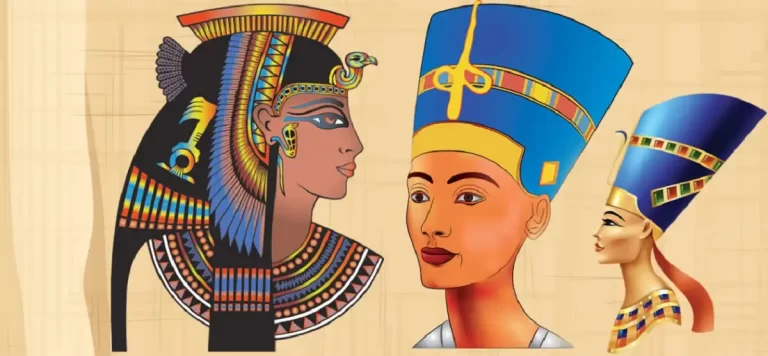
Art changed dramatically. Akhenaten was shown with a long face, full lips, a thin neck and wide hips, and the royal family appeared in intimate scenes, kissing and playing with their daughters under the rays of the Aten. See examples at the Egyptian Museum and the Luxor Museum.
Death and Erasure
After his death, Amarna was abandoned. Tutankhamun restored the old gods, and later kings such as Horemheb dismantled Akhenaten’s temples and reused their blocks. He was left out of king lists, including the Abydos King List, and later called “the enemy of Akhetaten”.
Visit Abydos, Dendera and Luxor
- Dendera and Abydos day tour from Luxor – from $69
- 2-day Luxor, Dendera and Abydos – from $339
- Luxor East and West Bank full day – from $39
- All Luxor day tours
Frequently Asked Questions about Akhenaten
Why is Akhenaten called the heretic pharaoh?
Because he rejected Egypt’s traditional gods, closed their temples and promoted the worship of a single god, the Aten.
Was Akhenaten Tutankhamun’s father?
DNA studies suggest that the mummy from tomb KV55, very likely Akhenaten, was Tutankhamun’s father.
Can you visit Amarna?
Yes. Tell el-Amarna in Minya has tombs and ruins of the city and can be visited on a full-day El Minya tour.